
How a Phinisi Is Built in Tana Beru

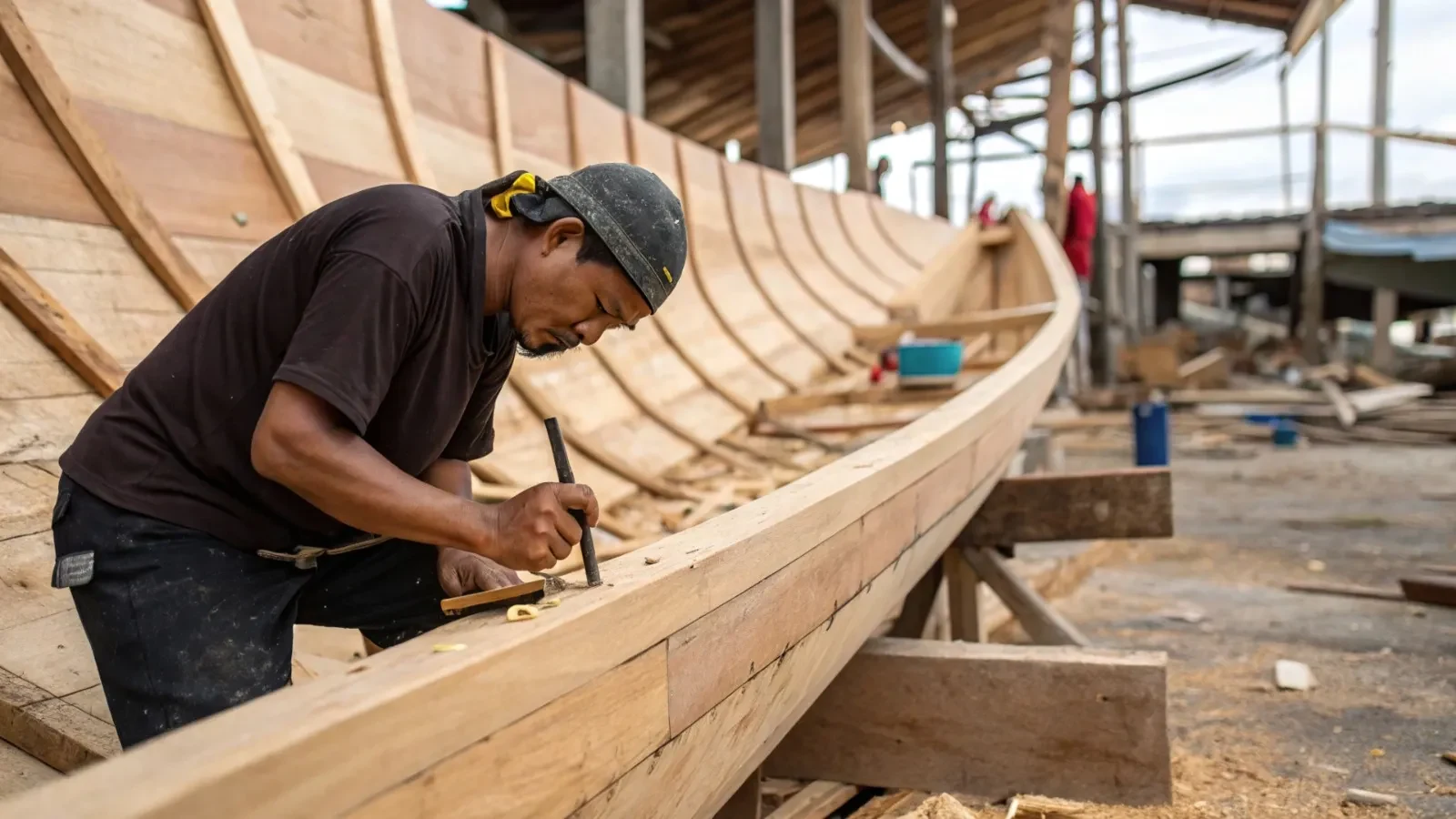
A Tana Beru phinisi is built shell-first: the keel is laid on the beach, planks are shaped and fastened into a self-supporting hull with wooden pegs, frames are fitted into that shell, then engineering, interior and finishing follow before the hull is rolled down the sand and launched.

Stage 1 — Keel-Laying and the Appasili Ceremony

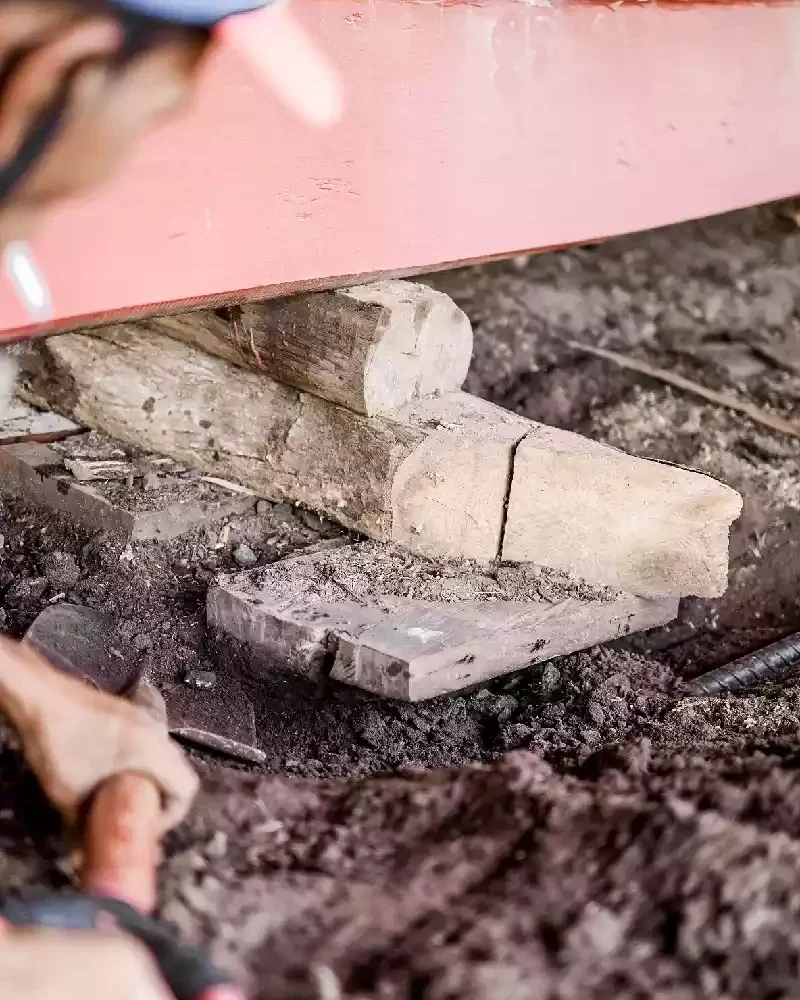
Every build begins with the keel, and in Tana Beru the keel is laid with ceremony. The appasili and related rituals mark the moment with offerings and blessings, reflecting an old belief that a boat carries a kind of life of its own. Beyond the spiritual meaning, keel-laying is the practical datum from which the whole hull is measured — the first milestone in your commission.
Stage 2 — Shell-First Planking

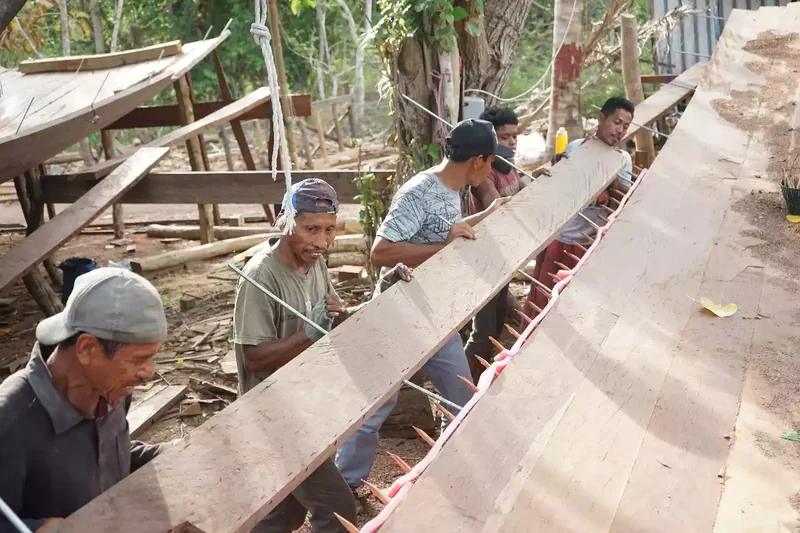
This is the stage that surprises outsiders. Rather than building a frame and skinning it, the shipwrights shape the planks and fasten them edge-to-edge into a self-supporting shell, reading the fairness of the hull by eye as they go. Each plank is selected for its grain and its place on the hull. The shape of the boat emerges directly from the wood, not from a mould.

Stage 3 — Fastening: Wooden Pegs Before Bolts

The seams are locked with long wooden dowels driven through the planking, drawing the timber tight. Steel drift bolts and galvanised fasteners are added where the structure demands. This peg-first fastening is central to how a Bugis hull holds together and why it can be repaired plank by plank far from any yard.

Stage 4 — Frames, Bulkheads and Structure

Only once the shell is fair are the frames — the internal ribs — fitted, along with bulkheads, floors and the structural spine that will carry engines and rig. Working into a finished shell lets the shipwrights place structure precisely where the real hull needs it.

Stage 5 — Engineering, Interior and Finishing

With the boat structurally complete, the modern work begins: engines and generators, tanks and plumbing, electrical and electronics, then the interior joinery and the deck. Caulking and sealing make the hull watertight; primer — often the distinctive iron-oxide red-lead you see on the beach — and finish coats protect the timber.

Stage 6 — The Beach Launch

There is no travel-lift here. The finished hull is rolled on logs down the sand and pushed into the sea by the community, often with as much ceremony as the keel-laying. Sea-trials follow, and only then is the boat handed over. It is the most public moment of any Tana Beru build — and the one owners fly in for.

Ask the Builder

“How long does each stage take?” Roughly: keel and planking are the long, patient months; framing and structure move faster; engineering and interior often take as long as the hull itself on a complex boat. Across a whole build, plan on 8–24 months by length and fit-out. Each stage is a payment and photo milestone, so you always know where your boat stands.

Frequently Asked Questions

Why build shell-first instead of frame-first?

It is the Bugis tradition and it produces a fair, sea-kindly, repairable hull shaped by the wood itself. Frames are fitted into the finished shell.

Are wooden pegs really strong enough?

Yes — peg fastening draws seams tight and, combined with steel bolts where load demands, has held ocean-going hulls together for centuries. It is also uniquely repairable.

What is the appasili ceremony?

A keel-laying ritual with offerings and blessings, reflecting the belief that a boat has a life of its own. It also marks the first build milestone.

How is a phinisi launched without a dock?

The hull is rolled on logs down the beach and pushed into the sea by the community — the traditional launch this coast is known for.

Start a Build Conversation

Every commission begins with a short, honest conversation about length, use, timber, budget band and realistic timeline — no obligation, no pressure. Contracts are issued by PT Komodo Galangan Nusantara.

WhatsApp +62 811-3823-875 · Email sales@komodoluxury.com

Message the build desk on WhatsApp

PT Komodo Galangan Nusantara · Komodo Luxury · Juara Holding Group (since 2015)

Part of Juara Holding Group.
Construction, repair, refit, and vessel-sale contracts are issued by PT Komodo Galangan Nusantara.
Boat-management contracts are issued by PT Komodo Vessel Management.
Brokerage, central agency, charter marketing, and commercial representation contracts are issued by PT Komodo Bahari Nusantara.
Separate contracts. Separate fees. Separate ledgers. One integrated maritime ecosystem.

Message the Build Desk on WhatsApp →